Carbs Aren't the Enemy — But How You're Eating Them Might Be
SF
The real conversation about carbohydrates isn't whether you should eat them. It's when, how much, and from where.
Let's clear something up right away: I am not anti-carb. Carbohydrates have a real, legitimate place in a well-designed nutrition plan — especially for anyone training hard. But for the average American living a largely sedentary life, the relationship with carbs has gone completely off the rails. Not because carbs are evil, but because the timing is wrong, the sources are poor, and the quantity is staggering.
So let's dig into the actual numbers — and then talk about what a smarter approach looks like.
Are carbs actually essential?
This is where it gets interesting. From a strict biological standpoint, carbohydrates are not technically classified as essential nutrients the way certain fats and amino acids are. Your body can produce glucose through a process called gluconeogenesis — converting protein and fat into usable fuel — which means you can survive without dietary carbohydrates.
However, "survive" and "thrive" are different things. Carbohydrates are your body's preferred and most efficient fuel source, particularly for high-intensity activity. Your brain runs primarily on glucose. Your muscles store carbohydrates as glycogen, which is the first thing they tap when you train hard. For anyone doing serious exercise — strength training, running, athletic performance — carbohydrates are not just helpful, they're the difference between a good training session and a flat one.
The bottom line: carbs aren't essential for survival, but they are the performance fuel of choice. The question is whether your activity level actually demands that fuel.
"The problem isn't the carbohydrate. It's the mismatch between how much people eat and how much they actually move."
What the average American is actually eating
Here's where the data gets sobering. Research consistently shows that the average American man consumes around 300 grams of carbohydrates per day, and the average woman around 225 grams. Some estimates put total intake even higher when accounting for hidden sugars in processed foods and beverages.
That's not the most alarming part. A Harvard T.H. Chan School of Public Health analysis found that low-quality carbohydrates — refined grains, starchy processed foods, and added sugars — account for roughly 42% of the typical American's daily calorie intake. High-quality carbs from whole grains and whole fruits? Just 9%.
So not only are most Americans eating a high volume of carbohydrates — they're eating the worst possible kind.
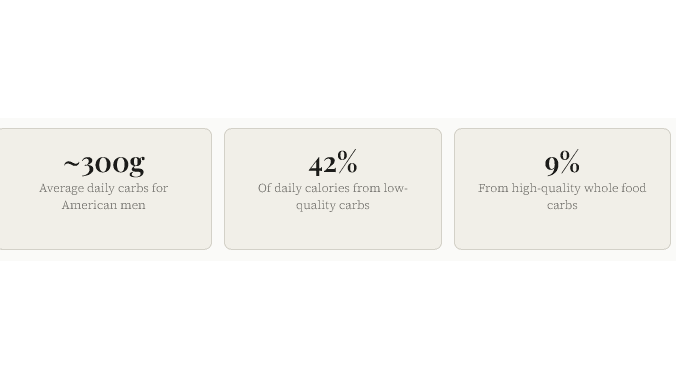
From high-quality whole food carbs
How much exercise would it take to burn that off?
This is the question that puts everything into perspective. Each gram of carbohydrate provides about 4 calories of energy. So 300 grams of carbohydrates represents roughly 1,200 calories that your body needs to either use or store.
Here's what burning a meaningful portion of that looks like in real exercise time, for a person weighing around 160 pounds at moderate to vigorous intensity:
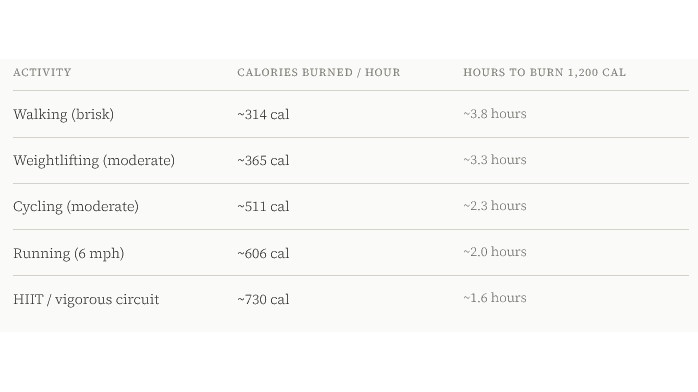
Keep in mind that during lower-intensity exercise, your body burns a mix of carbohydrates and fat — not carbohydrates alone. And during rest, it relies primarily on fat. So the idea that a 30-minute walk cancels out a day's worth of refined carbs doesn't hold up. The math simply doesn't work for a sedentary lifestyle built on a high-carb diet.
This is not an argument against exercise. Exercise is non-negotiable for long-term health. It's an argument for understanding that you cannot out-train a diet that's chronically oversupplied with quick-burning, low-quality fuel.
When carbs absolutely earn their place.
Here's where I want to be clear: if you're training like an athlete — lifting heavy four or five days a week, running distance, playing competitive sports — carbohydrates are your friend. They replenish glycogen stores, fuel intense efforts, and support recovery in ways that fat and protein alone cannot match.
The key is timing. Carbohydrates are most useful when your body is primed to use them, not store them. That means:
Around training: Consuming carbohydrates in the window before and after a workout — particularly a demanding one — gives your muscles the glycogen they need to perform and recover. This is where carbs do their best work.
Earlier in the day: Your insulin sensitivity is generally higher in the morning, meaning your body is better equipped to process and use carbohydrates efficiently early in the day versus late at night when activity winds down.
Matched to your output: A rest day doesn't demand the same carbohydrate load as a heavy training day. Adjusting intake based on what your body is actually doing that day is one of the most effective nutritional strategies available.
Not out of habit or convenience: Most Americans eat high-carb meals because that's what's available, affordable, and fast — not because their body is calling for fuel. Bread, pasta, chips, sweetened drinks, and fast food are calories in search of a purpose.
Source is everything
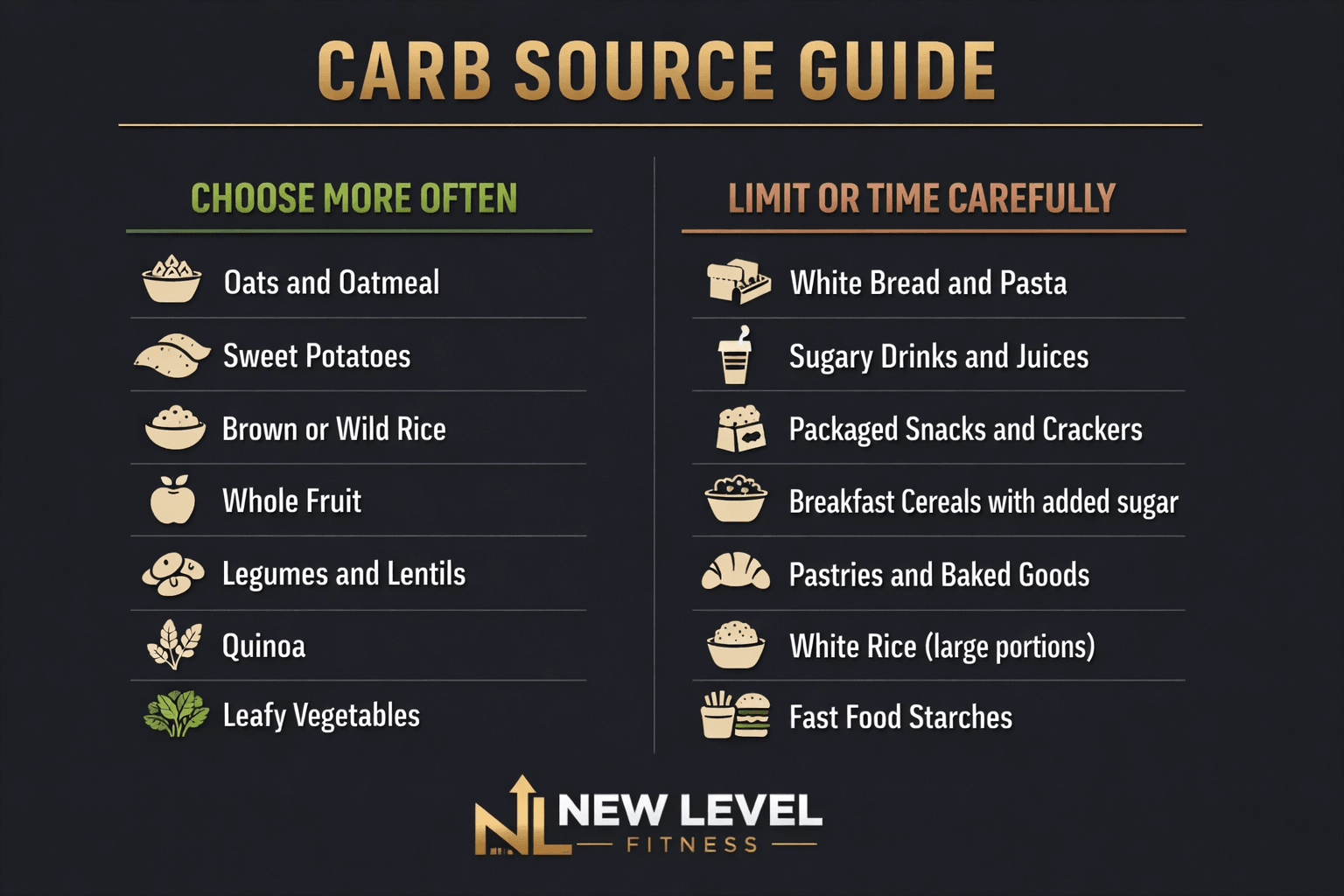
Two hundred grams of carbohydrates from white bread, soda, and packaged snacks lands very differently in your body than 200 grams from oats, sweet potatoes, brown rice, and fruit. The difference comes down to how quickly those carbohydrates enter your bloodstream.
Refined carbohydrates digest rapidly, spike blood sugar, trigger a large insulin response, and — when not immediately used for energy — get shuttled into fat storage. Whole food carbohydrates come packaged with fiber, which slows digestion, moderates the blood sugar response, and provides sustained energy rather than a spike and crash.
The bottom line
Carbohydrates are not the villain. They never were. But context matters enormously — and for most Americans eating 250–300 grams of largely refined carbs a day while sitting at a desk, the context is simply wrong.
If you're training consistently and intensely, earn your carbs. Use them strategically around your workouts. Choose whole food sources. Adjust the amount based on what you're actually demanding from your body that day.
If you're largely sedentary, start by cleaning up the source before worrying about grams. Swap refined for real. Add the exercise. Build the habit. The carbohydrate math starts to make a lot more sense once you give your body a real reason to use them.
Nutrition strategy is one of the most powerful levers you have for body composition, energy, and long-term health. If you want help building a plan that actually matches your training and your goals, that's exactly what we do at New Level Fitness.
📍 302 Burkmont Ave, Morganton · 📞 828-334-3368 · newlevelfitness1.mydurable.com